
Cash home sales 2026: why sellers choose cash
A seller in 2026 chooses certainty over price

“I don’t want another deal to fall apart.” That’s how a seller described it after a financed offer collapsed during underwriting. The next call was simple: sell for cash, close fast, move on.
That decision shows up across cash home sales 2026. Not because cash is new, but because the trade-off is clearer. Price matters, but certainty is what ends the stress.
When a financed buyer shows up, the sale depends on their lender, their job stability, the appraisal, and the inspection negotiations. Each step can fail. A cash offer removes most of those dependencies. Fewer parties, fewer approvals, fewer surprises.
This is not about chasing the highest headline price. It is about a seller picking the outcome they can actually rely on.
The hidden friction inside financed offers
Most people think a buyer’s offer is the finish line. It is not. It is the start of a process that includes lender checks, appraisals, and condition-based renegotiations.
The appraisal can come in low. When that happens, the buyer either brings extra cash, renegotiates, or walks. Inspections can surface repairs the seller did not plan to fix. Lenders can request new documentation late in the process.
None of this is unusual. It is how financed deals work. But every step adds friction and time.
Cash removes the lender layer. The deal becomes a negotiation between two sides and a clear path to closing. That simplicity is the reason many sellers accept a lower price in exchange for fewer unknowns.
For background on how lending and approvals influence transactions, see the Federal Reserve’s overview of mortgage markets at federalreserve.gov and the Consumer Financial Protection Bureau’s home buying resources at consumerfinance.gov.
Why ‘as-is’ matters more than upgrades
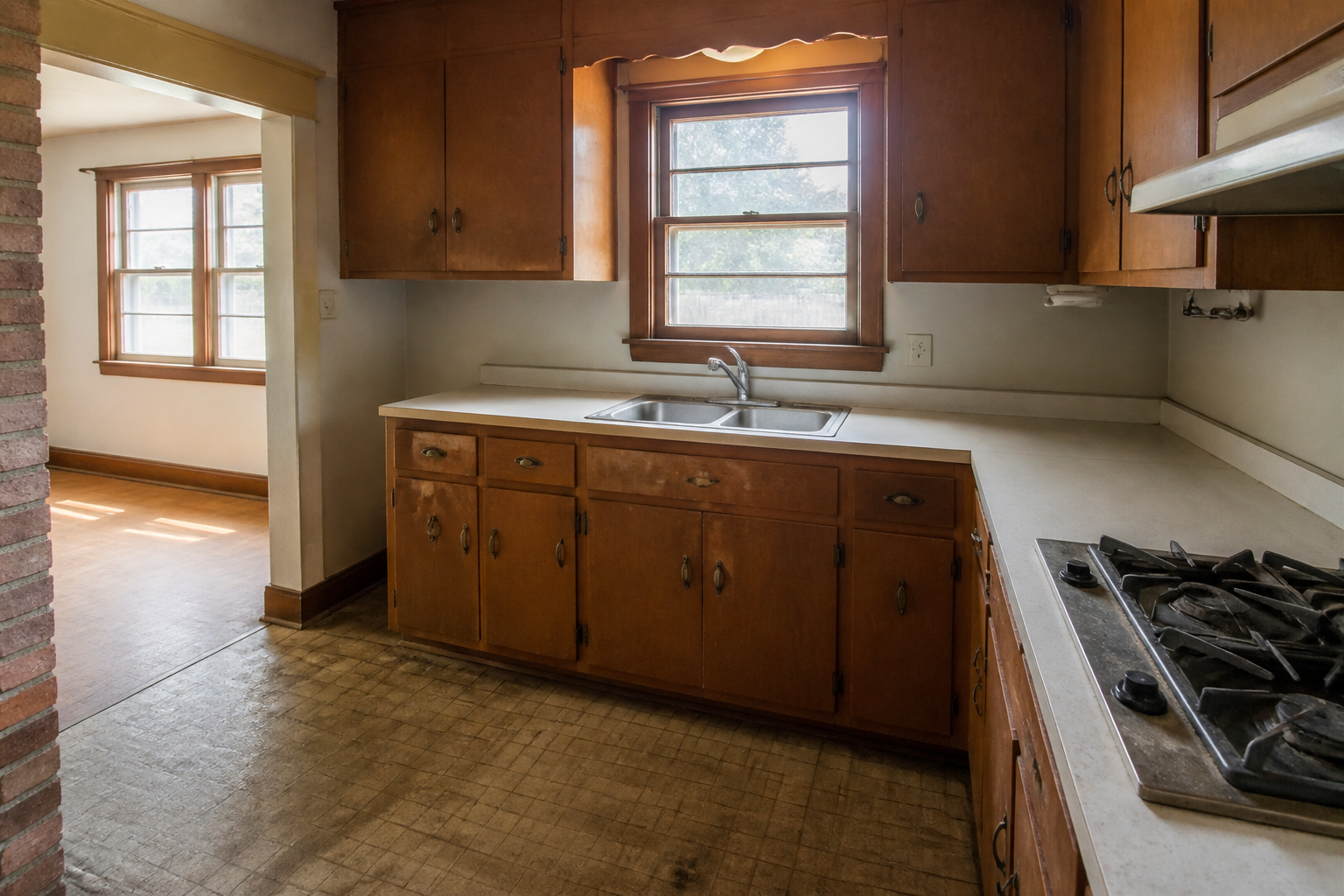
A common assumption is that sellers need to fix everything before selling. In practice, many sellers do not have the time, budget, or appetite for a renovation cycle.
An as-is sale means the buyer takes on the repairs. That shifts the burden away from the seller. No contractor timelines. No surprise costs during a remodel. No repeated showings while work is in progress.
Cash buyers are set up for this. They price the repairs into their offer and move forward without requiring the seller to upgrade the property first.
This is especially relevant for inherited properties, older homes, or houses that have deferred maintenance. The choice becomes simple: invest time and money into improvements, or accept a clean, as-is transaction.
Speed is not a luxury, it solves real problems
Speed is often framed as convenience. For many sellers, it is a solution to a real constraint.
Relocation timelines, inherited properties that need to be settled, or situations where carrying costs are adding pressure all change the math. A faster close reduces overlap, reduces ongoing expenses, and reduces uncertainty.
Financed deals move on a lender’s timeline. Cash deals move on the agreement between buyer and seller. That difference is why speed shows up again and again in cash home sales 2026.
The National Association of Realtors tracks transaction timelines and financing trends at nar.realtor, which consistently highlight how financing conditions affect closing certainty and duration.
The trade-off sellers are actually making

There is a clear trade-off in a cash sale. Sellers often accept a lower price in exchange for fewer risks, fewer delays, and less effort.
That trade-off is rational. A higher offer that never closes has no value. A slightly lower offer that closes cleanly has real value.
Seen through that lens, the decision is not about leaving money on the table. It is about choosing the outcome with the highest probability of completion.
This is why the conversation has shifted. Instead of asking “What is the highest offer?” many sellers now ask “Which offer actually closes?”
Where cash buyers fit in the market
Cash buyers are not one group. They include individuals, small operators, and larger firms. What they share is the ability to purchase without relying on a traditional mortgage for that specific transaction.
They focus on simplicity and speed. In exchange, they expect a price that reflects the condition of the property and the convenience they provide.
For sellers, the key is alignment. If the goal is maximum price and there is time to manage repairs and uncertainty, a financed buyer may fit. If the goal is a clean, predictable exit, a cash buyer often fits better.
For sellers dealing with inherited homes, major repairs, or tight timelines, selling directly for cash can remove multiple layers of friction. In those cases, reviewing options at svrehomeoffers.com gives a clear picture of what a direct, as-is sale looks like in practice.
What to do before choosing a cash offer
Decisions get easier with a simple framework. Not complicated, just clear.
A quick decision checklist you can keep
- Define the outcome. Do you value maximum price, or a predictable close with minimal effort?
- Assess property condition. If repairs are significant, factor the time and coordination required to complete them.
- Map your timeline. Are there deadlines tied to relocation, probate, or carrying costs?
- Compare certainty. Look at contingencies, financing risk, and how many steps can fail.
- Evaluate net, not headline. Consider repairs, concessions, and time costs, not just the offer price.
- Choose alignment. Pick the path that matches your constraints, not the one that looks best on paper.
This checklist is what most sellers end up building on their own after a few surprises. Using it upfront shortens that learning curve.
What changes next
Expect cash home sales 2026 to remain a meaningful part of the market because the underlying drivers are not going away. Sellers will continue to face timelines, property conditions, and financing uncertainty.
As long as those factors exist, a segment of sellers will choose certainty over optimization.
If the goal is a straightforward exit without repairs, showings, or financing risk, reviewing a direct cash option is a practical next step. The process is simple, the terms are clear, and the timeline is defined from the start.
Frequently Asked Questions
Why are more homeowners choosing cash offers in 2026?
Because cash offers reduce uncertainty and shorten the path to closing. Without a lender involved, there are fewer approvals and fewer points where a deal can fail, which many sellers value more than a higher but less certain price.
Do cash buyers always pay less for a house?
Often yes, because the buyer is taking on repairs and providing speed and certainty. The trade-off is a lower price in exchange for a simpler, more predictable transaction that avoids financing risks.
What does selling a house as-is mean?
It means the seller does not make repairs before the sale. The buyer accepts the property in its current condition and prices any needed work into the offer, removing the need for renovations before closing.
How fast can a cash home sale close?
Faster than a financed sale because there is no lender timeline. The exact timing depends on title work and agreement between both sides, but the process avoids the delays tied to loan approvals and appraisals.
Is a cash sale safer than a financed sale?
It is typically more predictable because it removes financing contingencies. With fewer dependencies, there are fewer reasons for the deal to fall apart after the contract is signed.