
Deed in Lieu of Foreclosure vs Selling
"Just give the house back to the bank and move on." That advice costs people more than they expect

That line shows up in bank conversations more than people realize. A homeowner misses a few payments, calls the lender, and hears some version of “we can take the property back and call it even.” It sounds clean. It sounds final.
A deed in lieu of foreclosure is exactly that. You hand the property back to the lender instead of going through foreclosure.
But clean on the surface does not mean cheap underneath. The difference between a deed in lieu and selling the house can follow you for years in your credit, your taxes, and your ability to buy again.
This is where most people get trapped. They compare stress, not math. The easier path emotionally is not always the better outcome financially.
If you are behind on payments or even just worried you might be, this decision matters more than anything else you do with that property.
What a deed in lieu of foreclosure actually means in real life

A deed in lieu of foreclosure means you voluntarily transfer ownership of your house to the lender. No auction. No court process dragging on for months. You sign the property over and walk away.
The lender agrees not to pursue foreclosure. In some cases, they also agree not to chase you for any remaining balance if the loan was larger than what the house is worth.
Sounds like a reset button. It is not.
The lender still reports the event to credit bureaus. It still shows up as a major negative mark. According to the Consumer Financial Protection Bureau, any serious mortgage default can impact your ability to qualify for future loans for years.
There is also a hidden layer most homeowners miss. If the lender forgives part of your debt, that forgiven amount can be treated as taxable income unless an exception applies. The IRS outlines this in its guidance on canceled debt at irs.gov.
So while you are giving the house back, you might still be dealing with credit damage and a potential tax situation afterward.
Selling the house before foreclosure works very differently

Selling keeps you in control of the transaction. You find a buyer, agree on a price, and use the proceeds to pay off the mortgage.
If the sale price covers the loan, you walk away clean. No default on your record tied to foreclosure alternatives. Your credit still reflects a normal sale.
If the house is worth less than what you owe, things get more complicated. You either bring cash to closing or negotiate with the lender to accept less than what is owed. That second route is commonly called a short sale.
The key difference is this. You are still actively solving the problem instead of handing it back.
The Federal Reserve’s Small Business Credit Survey from 2024 highlights how lenders evaluate past credit events when issuing new loans. Severe events tied to default carry more weight than negotiated resolutions. That distinction matters if you plan to borrow again later.
Even when a sale feels harder upfront, it often leaves fewer long-term consequences than a deed in lieu.
The contrarian take: the "easier" option is usually the more expensive one
Most advice frames a deed in lieu as a relief option. Less paperwork. Less time. Less confrontation.
That framing ignores what happens after you walk away.
A deed in lieu often compresses the problem into a single moment, but expands the consequences over time. Credit impact, potential tax exposure, and stricter lending terms later all stack quietly in the background.
Selling does the opposite. It feels heavier during the process, especially if you are under time pressure, but it tends to limit the damage once it is done.
This is where people split. Some choose speed and certainty. Others choose long-term positioning.
Neither choice is morally right or wrong. But pretending they cost the same is how homeowners end up surprised years later when they try to buy again.
A real operator scenario: inherited property, missed payments, and a forced decision
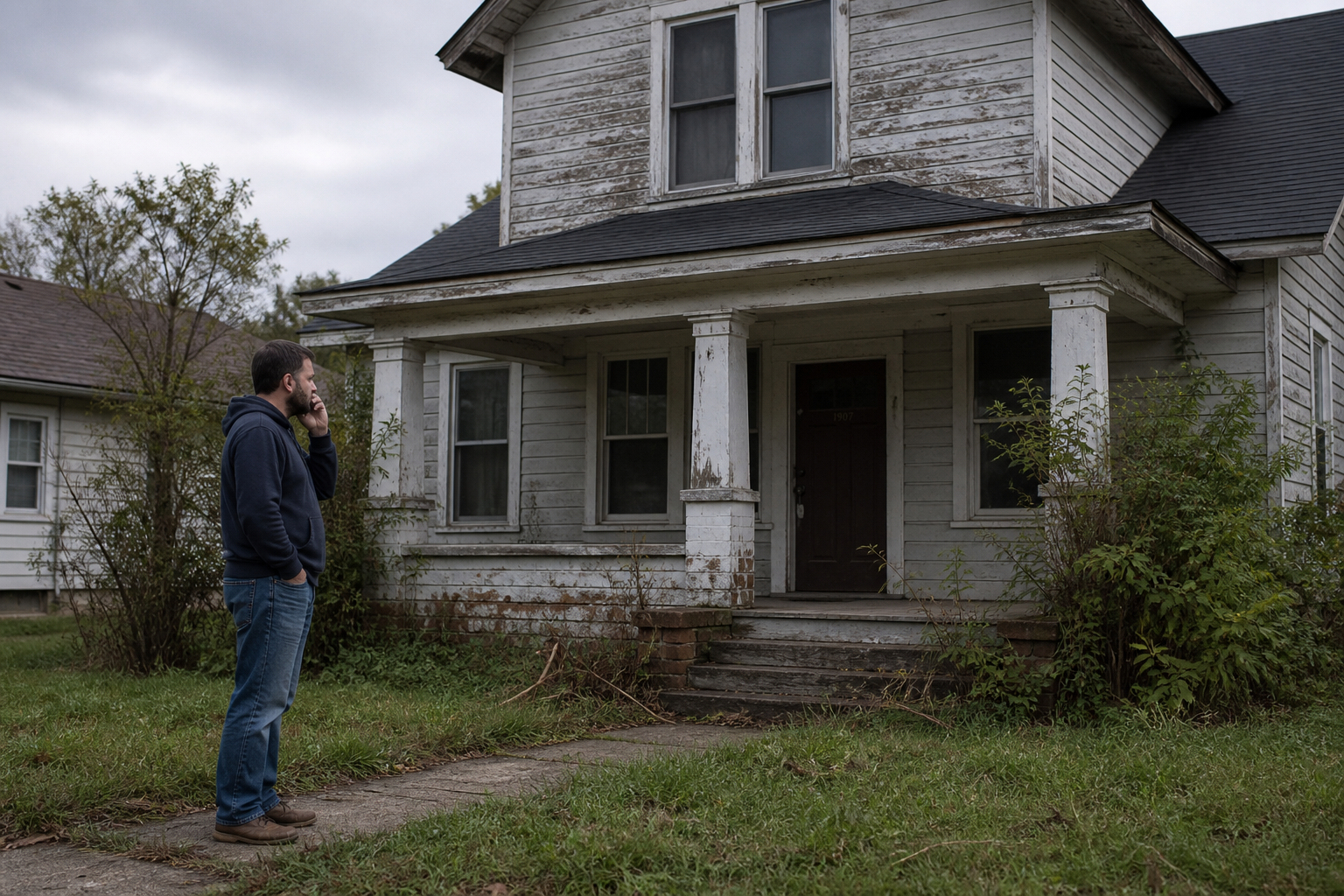
An inherited property owner in the Midwest reached out after falling behind on payments tied to a house they never planned to keep. The property needed repairs, and managing it from out of state was already a strain.
The lender offered a deed in lieu as a quick exit. The phrasing was simple: “sign it over and we will resolve the loan.”
At the same time, the owner explored selling as-is to an investor. The offers were lower than retail, but they created a path to pay off most of the loan and negotiate the remainder.
The deciding factor was not the sale price. It was what came after.
The owner chose to sell, close the gap with the lender, and avoid a formal default classification tied to handing the property back. The process took longer than the deed in lieu would have, but it preserved future borrowing flexibility.
This is the kind of fork most homeowners never expect to face. The paperwork looks similar. The outcomes are not.
The decision framework most homeowners wish they had earlier
When comparing a deed in lieu of foreclosure versus selling, the question is not which is easier. It is which leaves you in a better position six months and two years from now.
Use this quick framework to decide.
The walk-away checklist
- Loan balance vs market value: If selling can cover most or all of the loan, selling usually wins.
- Cash on hand: If you cannot bring money to closing and the gap is large, a deed in lieu may become more realistic.
- Credit recovery timeline: If you plan to buy again, avoiding a full default event matters.
- Property condition: Houses needing heavy repairs are harder to sell traditionally but still sell to investors.
- Time pressure: Foreclosure timelines can force faster decisions depending on your state.
- Lender flexibility: Some lenders negotiate short payoffs more easily than others.
- Tax exposure: Forgiven debt can create a tax situation. Review IRS guidance before deciding.
This is not theory. These are the exact tradeoffs that show up in real conversations with lenders and buyers.
Where investors fit into this decision
Most people assume selling means listing with an agent, cleaning the house, and waiting for retail buyers. That is only one path.
Investors buy properties as-is. No repairs. No showings. The numbers drive the offer, not the condition.
For homeowners dealing with missed payments, inherited properties, or major repairs, this route can bridge the gap between doing nothing and going straight to a deed in lieu.
The reason this matters is timing. Traditional sales can stretch. Investors move based on underwriting the deal and closing quickly if it works.
This is not about getting top dollar. It is about controlling the outcome instead of defaulting into the lender’s process.
If the numbers line up, selling even at a discount can still outperform the long-term cost of handing the property back.
What to do in the next 48 hours if this is your situation
If you are deciding between a deed in lieu of foreclosure and selling, action speed matters more than perfect information.
- Call your lender: Ask what options they will consider besides foreclosure. Write down exact terms, not summaries.
- Estimate your sale range: Look at recent nearby sales and current listings. Use tools like Zillow to get a directional sense, not a final number.
- Get an as-is offer: Compare what an investor would pay versus what you owe. This tells you how big the gap really is.
- Review tax implications: Check IRS guidance on canceled debt before agreeing to any forgiveness terms.
- Decide based on the exit, not the process: Focus on what your financial position looks like after everything is done.
If you are dealing with an inherited property, major repairs, or missed payments and need a fast as-is option, see how it works at svrehomeoffers.com. That path exists for situations where traditional selling is not realistic.
Frequently Asked Questions
What is a deed in lieu of foreclosure in simple terms?
A deed in lieu of foreclosure means you give your house back to the lender instead of going through foreclosure. The lender takes ownership and agrees to resolve the loan, but your credit still reflects a serious default event.
Is a deed in lieu better than foreclosure?
Yes, it is generally less damaging than a full foreclosure, but it still has significant credit impact. The Consumer Financial Protection Bureau notes that major mortgage delinquencies affect future loan eligibility for years.
Can you sell your house instead of doing a deed in lieu?
Yes, and in many cases selling creates a better long term outcome. If the sale covers the loan or most of it, you avoid a formal default classification tied to handing the property back.
Do you owe money after a deed in lieu of foreclosure?
Sometimes. It depends on whether the lender forgives the remaining balance. If debt is forgiven, the IRS may treat that amount as taxable income unless you qualify for an exclusion.
How fast can a deed in lieu of foreclosure happen?
It can move faster than foreclosure because it avoids court proceedings. The timeline still depends on lender approval and document processing, which can vary case by case.