
Right of Redemption in Foreclosure Explained
A homeowner thought the house was gone, then a letter changed the timeline
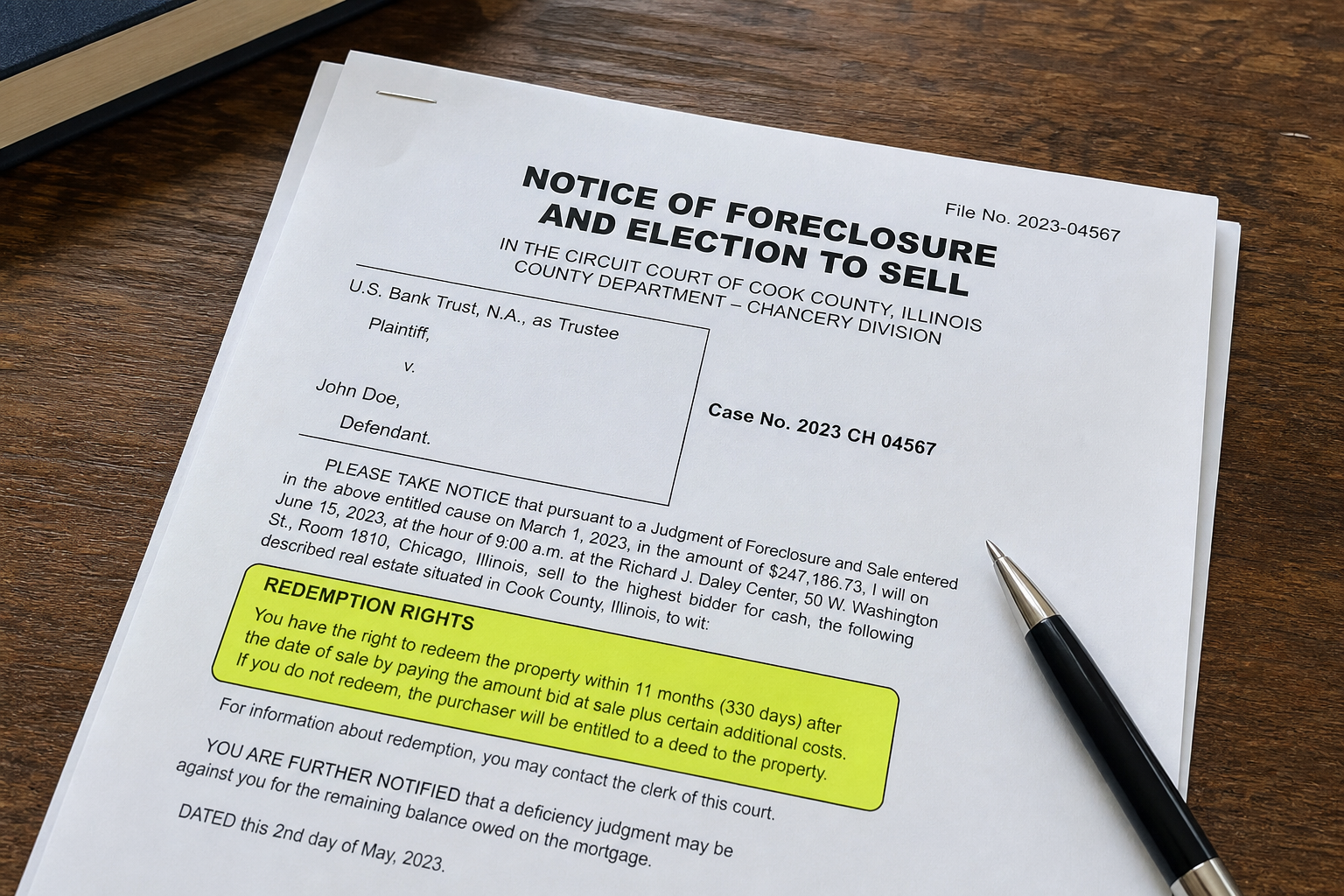
A foreclosure notice hits, the auction happens, and most people assume the story is over.
Then a second document shows up mentioning a “right of redemption.” Suddenly the timeline isn’t as final as it felt.
This is where confusion starts. Sellers think they can just get the house back whenever they want. Investors assume the deal is locked. Both sides are usually wrong.
The right of redemption in foreclosure is real, but it’s not a free reset button. It’s a narrow window with strict rules, and most people can’t actually use it even if they technically have it.
Understanding how it works changes how you make decisions before and after foreclosure, especially if you’re trying to avoid losing the property entirely.
What the right of redemption in foreclosure actually means
The right of redemption in foreclosure is the legal ability for a homeowner to reclaim their property after a foreclosure sale by paying off what’s owed.
That usually means the full loan balance, not just the missed payments. It can also include fees, legal costs, and sometimes interest that continued to build during the process.
There are two main versions:
- Equitable redemption: This happens before the foreclosure sale. You can stop the process by catching up or paying off the loan.
- Statutory redemption: This happens after the sale. Some states allow a limited period where you can still buy the property back.
The key detail most people miss is this: after the auction, you are not negotiating anymore. You’re paying a defined amount under state law.
The Consumer Financial Protection Bureau outlines the broader foreclosure process and borrower rights, including redemption concepts, here: https://www.consumerfinance.gov/ask-cfpb/what-is-foreclosure-en-305/
That definition sounds empowering on paper. In practice, the barrier is the amount of money required in a very short window.
Why most sellers never use their redemption rights

On paper, redemption sounds like a second chance. In reality, it’s a cash problem.
To redeem a property, you typically need to pay the entire debt, not just the overdue portion. If someone fell behind on payments in the first place, coming up with that full amount quickly is extremely difficult.
There’s also a timing issue. Redemption periods are short and strict. Once the window closes, the right disappears completely.
Another factor is access to financing. Traditional lenders usually won’t step in after a foreclosure sale. The property has already been through distress, and the borrower’s credit has taken a hit.
The Federal Reserve’s housing research consistently shows that financial shocks and liquidity constraints are major drivers of foreclosure outcomes, not just income levels. You can explore broader housing distress data here: https://www.federalreserve.gov/consumerscommunities/housing.htm
So while the right exists, the number of people who can realistically exercise it is small. It’s less of a safety net and more of a last-resort technical option.
The part investors watch that most homeowners don’t see
After a foreclosure auction, ownership might look settled, but in states with redemption periods, there’s still uncertainty.
Whoever bought the property has to wait out that redemption window before they can fully move forward. That means holding costs, legal risk, and sometimes delays in repairs or resale.
This creates a weird middle phase where the property is sold, but not completely secure.
From the outside, it looks like the deal is done. Behind the scenes, there’s a countdown happening.
That’s why some buyers are cautious in areas with strong redemption laws. The timeline isn’t just about closing, it’s about when the ownership becomes final.
For homeowners, this window can feel like hope. For investors, it’s a risk calculation.
Both sides are reacting to the same rule in completely different ways.
The biggest misconception: redemption will save the deal

The most common belief is that redemption gives homeowners a realistic way to recover the property after foreclosure.
It usually doesn’t.
The requirement to pay off the full balance makes it more of a technical right than a practical solution. By the time foreclosure is complete, most sellers are dealing with missed payments, fees, and limited borrowing options.
That’s why waiting for redemption as a strategy often backfires.
Decisions that happen before the foreclosure sale carry far more impact. Options like selling the property, negotiating with the lender, or restructuring the loan are still on the table earlier in the process.
Once the sale happens, those options shrink dramatically.
This is where timing matters more than the legal right itself.
A simple decision path most sellers wish they saw earlier
If foreclosure is already in motion, decisions get compressed fast. Having a clear path helps avoid relying on redemption as a fallback.
Foreclosure decision path
- Still before auction: Talk to the lender about reinstating the loan or selling the property. This is the widest window for options.
- Auction approaching: Focus on exit strategies that protect equity if any remains. Time matters more than price perfection here.
- After auction, redemption available: Only realistic if you have access to full payoff funds. Otherwise, treat ownership as effectively transferred.
- After redemption period ends: The deal is final. No recovery path exists through this route.
This isn’t about fear, it’s about clarity. The earlier the decision, the more control you have.
Waiting for a legal technicality to fix a financial problem rarely works.
When the right of redemption can actually help
There are situations where redemption does matter.
If a homeowner has access to capital, through savings, family support, or a refinancing path, the right of redemption can be used to reclaim the property.
It can also create negotiating leverage in some cases. If a buyer knows redemption is possible, there may be room to work out an agreement before the window closes.
But these scenarios depend on one thing: access to money within a short timeframe.
Without that, redemption stays theoretical.
For most sellers, the better move is acting before foreclosure completes, not after.
What to do next if foreclosure is already in motion
If you’re in this situation, the goal is to make a clean decision quickly instead of relying on a narrow legal window later.
- Confirm your timeline: Call your lender and ask for exact foreclosure milestones and dates.
- Understand your payoff: Request the full amount required to stop foreclosure, not just overdue payments.
- Evaluate exit options: Selling before the auction often preserves more control than waiting.
If the property is already distressed, needs repairs, or the timeline is tight, selling as-is becomes a practical path. That’s exactly the kind of situation handled at svrehomeoffers.com, where sellers close without repairs or long delays.
The key is acting while options still exist. Redemption is a fallback, not a plan.
Frequently Asked Questions
What is the right of redemption in foreclosure in simple terms?
It’s the legal right to reclaim your home after foreclosure by paying off what you owe in full. The Consumer Financial Protection Bureau explains that foreclosure doesn’t always end at the auction, depending on state law.
Can I get my house back after a foreclosure sale?
Yes, but only if your state allows a redemption period and you can pay the full balance owed. Most people cannot access that amount quickly, which is why it’s rarely used.
How long is the redemption period after foreclosure?
It depends on the state. Some allow a short window after the sale, while others do not offer post-sale redemption at all. Your county records office or attorney can confirm the exact timeline.
Do I have to pay the full loan to redeem my property?
Yes. Redemption usually requires paying the entire remaining loan balance plus fees, not just missed payments. That’s the main reason it’s difficult to use.
Is redemption better than selling before foreclosure?
No. Selling before foreclosure typically gives you more control and flexibility. Redemption is limited by time and requires full payoff funds, which most sellers don’t have access to.