How to Value a 10-Unit Apartment Building
The email that made a seller rethink his price

David, a small multifamily owner in Ohio, opened an email from a buyer that read, "Your rents are $300 under market on 7 units." He had listed his 10-unit building based on what a neighbor sold for, not on what the property actually produced.
That one line reframed everything. A 10-unit building is not priced like a house down the street. It is priced like a business. Buyers care about what it earns, what it costs, and how stable those numbers are.
If you are trying to figure out how to value a 10-unit apartment building before selling, the starting point is simple: your price is a function of income, not comps.
Why price per square foot fails on 10-unit buildings
Single-family homes often trade based on nearby sales. A 10-unit does not behave that way. Two buildings on the same street can sell for very different prices if one produces more income or has cleaner operations.
Buyers, especially those using lenders, focus on whether the rent covers the mortgage and expenses. That is the lens used by banks like Fannie Mae and Freddie Mac in small multifamily lending guidance, which centers on income stability and expense ratios rather than cosmetic features. See Fannie Mae Multifamily.
There is a practical reason for this. Income can be measured and projected. Paint color cannot. When someone is buying ten units, they are buying ten rent streams.
Start with gross rent then strip it down to reality
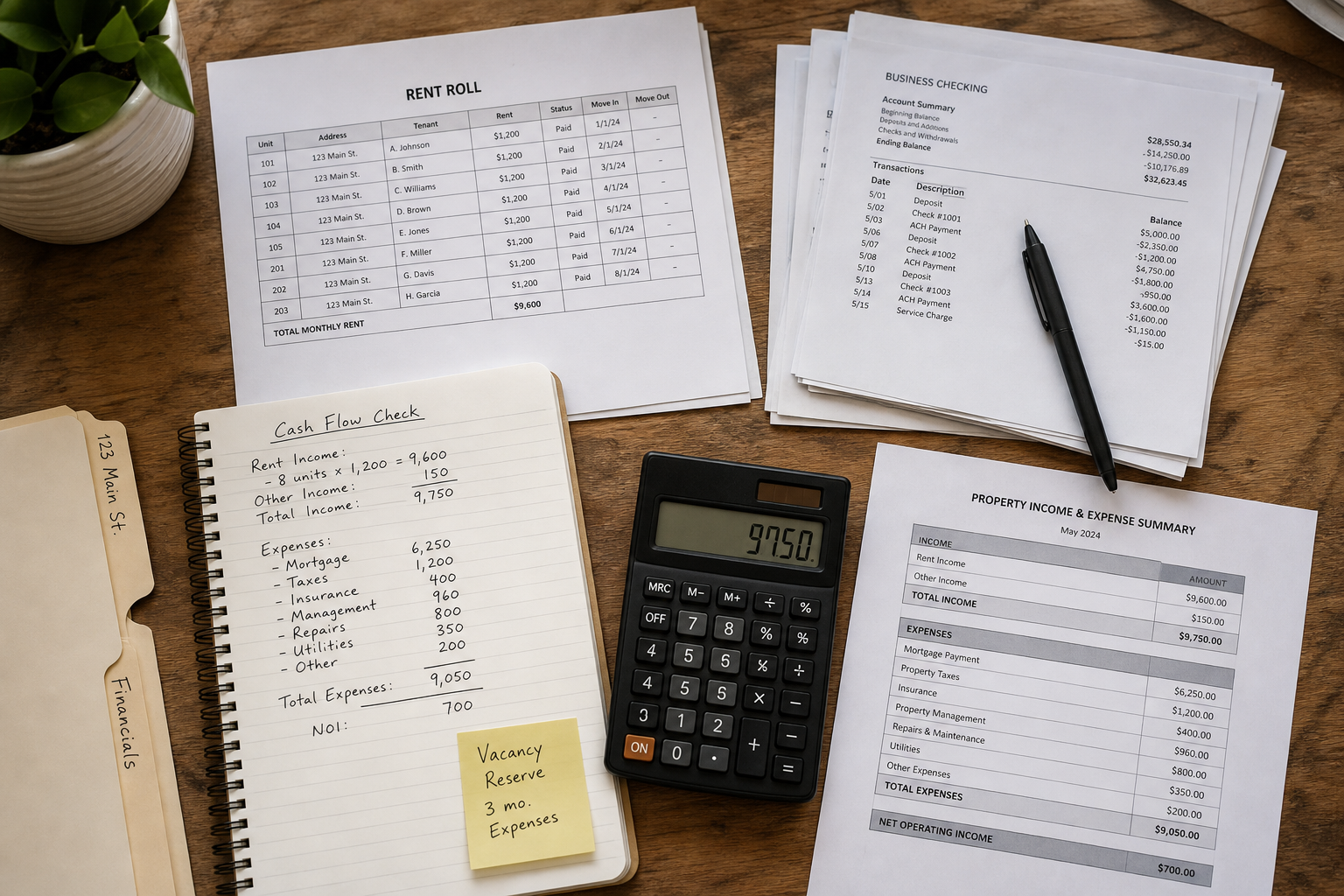
The first number most sellers quote is gross rent, what all units would bring in if collected. Buyers immediately discount it. They look at what is actually collected, not what could be.
Pull your last 12 months of rent rolls and bank deposits. This becomes your baseline. Then subtract vacancies, late payments, and concessions. The Bureau of Labor Statistics tracks rent trends nationally, but your building’s history matters more than any average. See BLS CPI Rent Data.
Buyers will ask for proof. If your numbers live in memory instead of statements, your valuation drops before negotiations even start.
What buyers actually trust
- Signed leases for each unit
- Bank statements showing rent deposits
- A clean rent roll with tenant names and lease dates
If those three line up, your income becomes credible. Credible income commands stronger offers.
Expenses are where most sellers overestimate value
Many owners understate expenses without realizing it. They forget irregular costs like roof repairs, unit turns, or property management if they self-manage.
Buyers normalize expenses. They assume professional management even if you handle it yourself. They include maintenance, taxes, insurance, utilities, and a reserve for future repairs.
This is where deals shift. A building that looks profitable on paper can shrink quickly once realistic costs are applied.
The Federal Reserve’s small business data regularly shows that cash flow stability drives lending decisions more than top-line revenue. See Fed Small Business Credit Survey.
That same logic applies here. Clean, believable expenses support a stronger valuation than optimistic ones.
The number that actually drives your price

After income and expenses, what remains is the annual profit before debt. This is the number buyers use to decide what the property is worth.
They compare that profit to what similar buildings in your area trade for relative to income. That ratio is often called a cap rate, but the plain version is this: what return would someone get if they paid all cash.
If your building produces stable profit and similar assets are selling at tighter returns, your value increases. If your income is inconsistent or expenses are unclear, buyers demand a discount.
This is why improving operations before selling often creates more value than minor renovations. Stability beats cosmetics when ten leases are involved.
A real operator example of value changing fast
Sarah, an owner in Arizona, reviewed her 10-unit after a buyer pointed out inconsistent leases. Three units were month-to-month, and two were below market.
Over the next leasing cycle, she standardized lease terms and adjusted rents gradually. The building did not change physically, but the income became more predictable.
A later offer reflected that stability. The buyer’s concern shifted from "Can this income hold?" to "How long will it hold?" That difference alone changed the negotiation dynamic.
Nothing about the property itself improved. The numbers did.
The one-page valuation checklist buyers mentally run
This is the closest thing to a save-worthy artifact most sellers never see. It mirrors how buyers evaluate a 10-unit before making an offer.
- Income verified by leases and deposits for the last 12 months
- Vacancy pattern consistent, not spiking unexpectedly
- Expenses include management, maintenance, taxes, insurance
- No deferred major repairs that will hit immediately after purchase
- Lease terms aligned, not a mix of short-term and informal agreements
- Clear ownership records and no unresolved liens
If your building checks these boxes, valuation discussions become straightforward. If not, buyers price in uncertainty.
Contrarian reality most owners miss before selling
Waiting for the perfect market often costs more than fixing your numbers now. Many owners delay selling hoping for higher prices, while their rent roll and expense tracking remain messy.
Buyers do not pay for hope. They pay for what they can verify.
Improving documentation, stabilizing leases, and cleaning up expenses can increase perceived value faster than market timing. That is not intuitive, but it shows up repeatedly in real deals.
A clean set of numbers today can outperform a slightly better market later with unclear income.
Where most 10-unit sellers get stuck
The sticking point is not math. It is perspective. Owners think like homeowners, buyers think like operators.
That gap shows up in pricing expectations. Sellers anchor to what they feel the property is worth. Buyers anchor to what the numbers support.
Bridging that gap requires seeing your building the way a buyer or lender will. That shift alone can prevent months of sitting on the market with no serious offers.
If the goal is to sell efficiently, clarity beats optimism every time.
If the numbers make the sale difficult
Some buildings do not present cleanly on paper. Inherited properties, deferred maintenance, or inconsistent tenants can make traditional buyers hesitate.
In those cases, selling as-is becomes a practical option. When a seller needs a faster, simpler process without fixing operations first, that route removes a lot of friction.
Situations like inherited units or major repairs often fall into that category. If that is the position, svrehomeoffers.com is built for sellers who need a straightforward exit without stabilizing everything first.
What to do before you put your 10-unit on the market
Before you list or start conversations with buyers, take a week to get your numbers in order. This changes how every conversation goes.
- Gather leases, rent roll, and bank statements from the past year.
- List every expense, including ones you usually ignore like repairs and turnover.
- Stabilize leases where possible, even if that means short-term adjustments.
- Walk the property and note any immediate issues a buyer will flag.
Those steps do more for your final price than guessing what the market might do next.
Frequently Asked Questions
How do I calculate the value of a 10-unit apartment building?
Start with actual rent collected over the last year, subtract real operating expenses, and evaluate the remaining annual profit against what similar buildings sell for based on income. Buyers use that profit as the foundation for pricing.
What matters more, location or income for a 10-unit building?
Income drives value more directly because it determines what the property produces financially. A strong location helps support rent stability, but buyers still base offers on verified income and expenses.
Do I need an appraisal before selling a 10-unit property?
No, but buyers and lenders will often order one. Having clean financials and documentation makes that appraisal more likely to support your asking price.
Why do buyers discount my stated rental income?
Because they rely on proof, not projections. Lease agreements and bank deposits carry more weight than estimated or future rents.
Can improving management increase my property value before selling?
Yes, more consistent leases and documented income make the property look more stable. That stability directly affects how buyers price the deal.