
What Happens If You Stop Paying Your Mortgage
The missed payment that starts everything
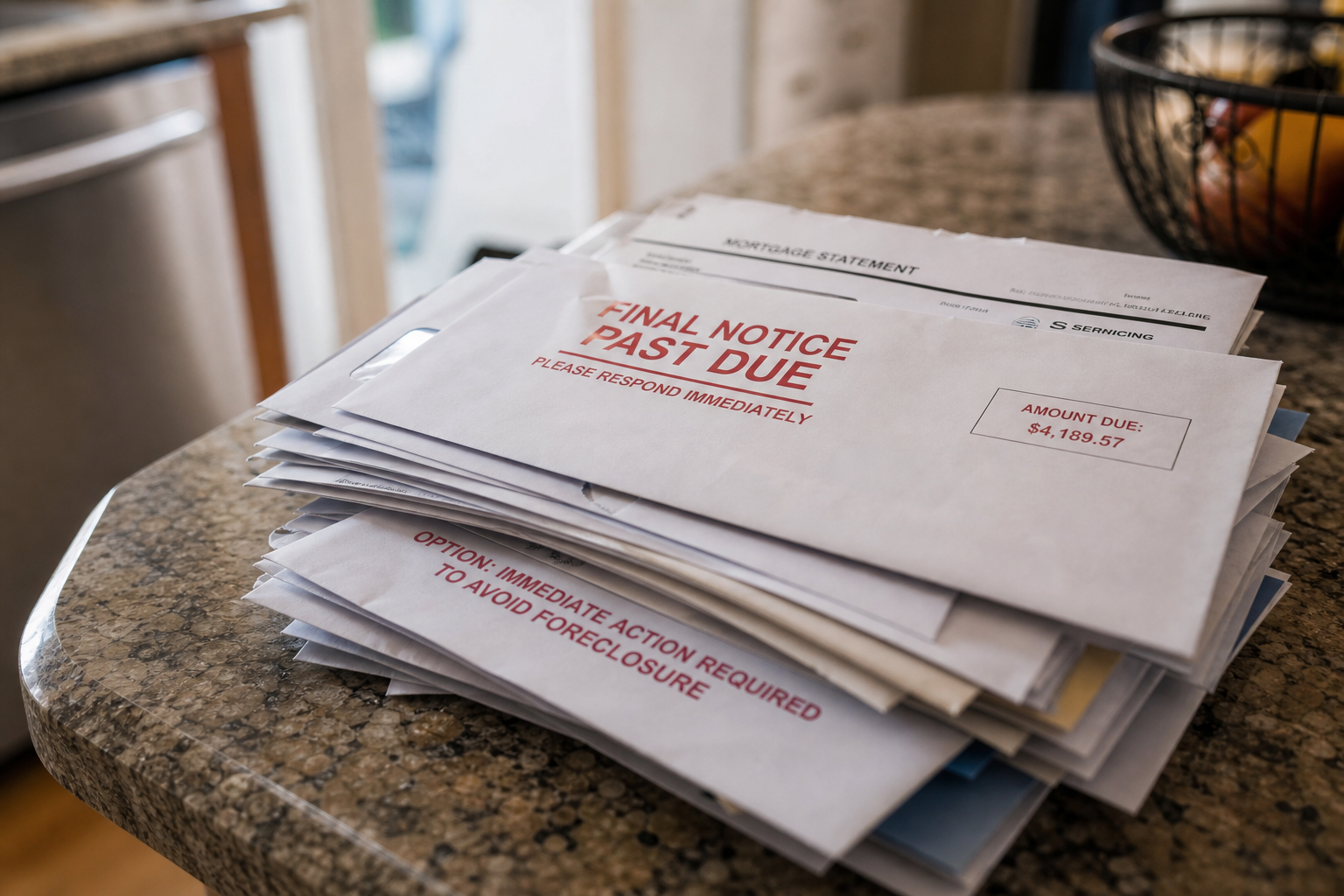
Three missed payments. That’s usually when the tone changes.
At first, it feels manageable. One late payment turns into two. The lender sends reminders, then stronger notices. Somewhere in that stretch, most homeowners realize this isn’t just a temporary slip.
Stopping mortgage payments doesn’t trigger foreclosure overnight. It starts a sequence. And that sequence is slower, more procedural, and more negotiable than most people think.
The early stage is called delinquency. You’re behind, but you still have control. The lender hasn’t taken action yet beyond warnings. This window matters more than anything that comes later.
According to the Consumer Financial Protection Bureau, most lenders won’t begin foreclosure until a loan is more than 120 days delinquent. That gap exists for a reason. It’s the system giving you time to fix it.
Miss this window, and the conversation changes from “how do we catch up?” to “how do we exit?”
What happens if you stop paying your mortgage after 90 days
At around three months behind, lenders escalate.
This is where most homeowners get a formal notice of default. It’s not just a warning. It’s a signal that legal steps are coming if nothing changes.
The process varies by state, but the structure is consistent. You’ve now moved from being behind to being in pre-foreclosure. That means the lender is preparing to take the property if the debt isn’t resolved.
Here’s what actually starts happening behind the scenes:
- The lender assigns the file to a foreclosure department or attorney
- Fees start stacking on top of missed payments
- Communication shifts from reminders to formal notices
This is also when most people freeze. They stop opening mail. They avoid calls. That reaction makes sense emotionally, but financially it usually makes things worse.
There are still multiple ways out at this stage. The key difference is you’re now on a clock.
The U.S. Department of Housing and Urban Development outlines options like repayment plans, loan modifications, and selling before foreclosure completes. Every one of those options is easier before the process formally advances.
The foreclosure timeline most people misunderstand

Foreclosure is not a single event. It’s a timeline with multiple exit points.
People imagine a sudden eviction. In reality, it’s a drawn-out process that can take months or longer depending on the state and court system.
There are two main types: judicial and non-judicial foreclosure. Judicial goes through the courts. Non-judicial follows a set legal process without a judge. The difference affects speed, not outcome.
A typical sequence looks like this:
- Missed payments stack up
- Notice of default is issued
- Pre-foreclosure period begins
- Foreclosure sale is scheduled
- Property is auctioned or taken back by the lender
Here’s the part most people don’t realize. You can still sell the house during much of this timeline.
The lender doesn’t actually want the house. They want the loan repaid. If you can sell and cover the balance, the process stops.
That’s why many investors focus on pre-foreclosure deals. Not because someone “lost” their house, but because there’s a narrow window where solving the problem benefits both sides.
A real situation that plays out more than people admit
A tired landlord reaches a breaking point faster than a homeowner.
One owner I spoke with had a rental that stopped cash flowing after repairs and vacancy stacked up. The rent no longer covered the mortgage, and covering the gap out of pocket stopped making sense.
He didn’t miss one payment by accident. He made a decision. Stop paying, reassess, figure out an exit.
What happened next followed the exact pattern above. Notices. Pressure. Deadlines.
The shift came when he realized something simple. Waiting made the outcome worse. Fees increased. Options narrowed. Stress compounded.
Once he decided to sell, the process flipped. Instead of reacting to the lender, he controlled the timeline again.
This is the part people don’t get told clearly. Stopping payments doesn’t remove the problem. It compresses the time you have to solve it.
The credit impact nobody explains clearly

Stopping mortgage payments hits your credit hard. There’s no soft way to say it.
Each missed payment gets reported. By the time foreclosure is in motion, the damage is already done. The foreclosure itself stays on your credit report for years.
But here’s the part that matters more than the score itself. Future lenders look at the story behind it.
Was the property sold before foreclosure completed? Was there a settlement? Was it abandoned?
Those details affect how quickly someone can recover and borrow again.
According to data discussed in the Federal Reserve’s 2024 Economic Well-Being report, housing-related financial stress remains one of the most common sources of credit disruption for households. That means lenders see these situations often. They’re not rare edge cases.
The outcome matters more than the event. Two people can both miss payments and end up in completely different positions depending on how they handle the exit.
Your actual options before foreclosure completes
There are always more options than people think, but fewer than they hope.
The main paths are straightforward:
- Catch up on payments if income recovers
- Negotiate a modified loan with the lender
- Sell the property before foreclosure
- Agree to a short sale if the property is worth less than the loan
The earlier you act, the cleaner these options look.
Once the foreclosure sale date is set, flexibility drops. Buyers get cautious. Timelines shrink. Lenders become less willing to adjust terms.
This is where most people realize they waited too long.
If you’re already in that window and the property needs work, has tenants, or you just need a fast exit, selling directly can be the simplest path. That’s exactly what svrehomeoffers.com is built for. It’s not about maximizing price on paper. It’s about solving the situation before it gets worse.
Why stopping payments feels like relief but creates pressure
There’s a reason people consider it.
Stopping the payment gives immediate breathing room. Cash stays in your account. The monthly pressure drops.
But that relief is temporary. The system doesn’t pause. It keeps moving forward without you.
Interest still accrues. Fees still stack. Legal steps still progress.
The emotional shift is what catches people off guard. What felt like control turns into urgency as deadlines get closer.
This is why investors look at these situations differently. Not because they’re immune to risk, but because they act earlier in the timeline.
The earlier the decision, the more options exist. That’s the entire game.
What to do in the next 48 hours if you’re behind
If payments are already slipping, action matters more than information.
- Call your lender and ask about loss mitigation options. Use that exact phrase. Every major servicer has a department for it.
- Pull a payoff statement so you know the exact balance, not an estimate.
- Look at recent comparable sales on platforms like Zillow to understand what the property could realistically sell for.
- Decide whether keeping the property still makes financial sense or if exiting is cleaner.
- If speed matters, explore direct sale options where timelines are measured in days, not months.
Waiting doesn’t improve any of these steps. It just removes choices.
If the situation already feels like it’s moving faster than you can keep up with, start with a simple goal. Take back control of the timeline.
Frequently Asked Questions
How long can you go without paying your mortgage before foreclosure?
Most lenders wait until a loan is about 120 days delinquent before starting foreclosure, according to the Consumer Financial Protection Bureau. That window exists to give homeowners time to catch up or find an exit.
Can you sell your house if you stopped paying the mortgage?
Yes, you can sell during pre-foreclosure in most cases. As long as the sale covers the loan or the lender approves the terms, the foreclosure process can be stopped.
Does missing one mortgage payment start foreclosure?
No, one missed payment typically results in late fees and a notice. Foreclosure is a process that usually begins after several missed payments, not just one.
What happens to your credit if you stop paying your mortgage?
Your credit score drops with each missed payment, and a foreclosure can stay on your report for years. Lenders also look at how the situation was resolved, not just the score impact.
Is it better to stop paying or sell your house?
Selling before foreclosure is usually the cleaner option because it limits credit damage and fees. Waiting reduces flexibility and can make the outcome more expensive.